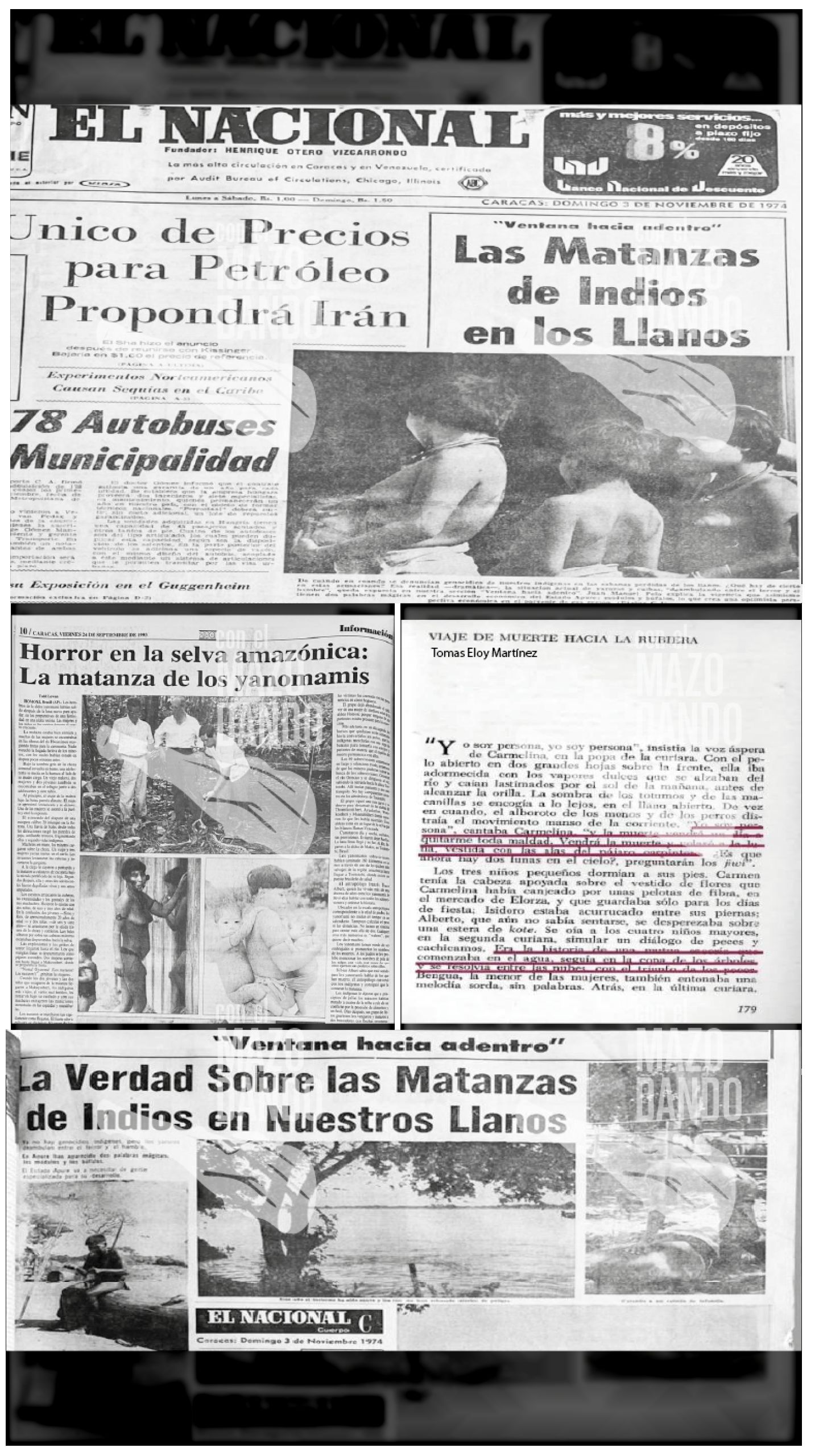
“GOING OUT TO GUAJIBEAR: THE RUBIERA MASSACRE” THE MASSACRE OF INDIANS IN ALTO APURE
Published at: 15/10/2025 09:00 PM
(El Nacional, November 3, 1974 and Tomás Eloy Martínez: Death Journey to La Rubiera)
- On December 26, 1967, after climbing the Capanaparo River for 48 hours, 16 members of a Cuiva family were victims of a razzia of extermination in Hato La Rubiera.
- Mass murder usually carried out by landowners in this border area and known as “going out to Guajibear”.
- Forty-eight hours earlier, the Cuivas had left Elorza, Edo. Hurry up, invited to lunch to agree on an amicable working agreement offered by the owner of the herd, Marcelino Jiménez.
- It was just over 11:00 a.m., when the unprepared family disembarked at La Rubiera to enjoy this welcome meal.
- The first to sit at the table to eat were hungry children. When the parents did the same from the rooms, two thugs from Apurea came out with revolvers in their hands and six pawns with machetes and sticks.
- Of the 19 cuivas on board, only three, who had been left behind, assuring the curiaras, managed to save themselves from this journey to death, and then recount everything that happened.
- Four months earlier, one morning in August 1967, five hundred guajibos were victims of this practice of extermination. Their piled corpses were cremated on huge pyres and the survivors were forced to work as pack animals; by the time they had run out of strength they were ground to sticks.
- In the middle of the 20th century, the Venezuelan and Colombian plains were the scene of the sustained extermination of the tribes of Yaruros, Cuivas, Chiracoas and Salivas Indians, by the cruelest and most Dante means.
- “Going out to Guajibear” was synonymous during the Fourth Republic with landowners who “got used to going to sack villages to snatch their meager possessions and take their wives; the big landowners pushed them at gunpoint into less prosperous lands; the missionaries dismantled a beautiful worldview of the universe that imagines human beings as seeds planted by birds and presupposes that all the bodies of The Earth has a twin body up there, in the sky... For at least three decades the cuivas have been reduced to the most painful indigence...”.
- The terrorists, both on the Venezuelan and Colombian sides, launched this genocide to evict from the reserve areas the real owners of these territories, whose hunting and fishing reserves belonged to them for millennia.
- In the context of the 1961 Constitution, all indigenous ethnic groups in Venezuela were, for 40 years, excluded from any rights and invisible to the eyes of the law.
- “No indigenous community in Venezuela has been so persecuted and tormented, so vexed by acculturation and slavery as these ethnic groups, children of the savanna, confined to the south of the Apure state, together with small conucos, to survive on the topocho and the yuca.”
- In 1976, nine years later, priest Gonzalo González explained how the 16 cuivas were deceived and taken to the slaughterhouse. It was then that the press echoed the massacres and the serious problem of decades of extermination came to light.
- He warned about a guajibeada planned for that date in Elorza and reported the bloody events to various governmental bodies in the country, accompanied by some ranchers sensitive to centuries-old ethnocide.
- Previously, the massacre of motilones in the Edo. Zulia, on the part of landowners and oil company agents, went unnoticed. As well as the massacre of the Barí Indians in the Sierra de Perijá, in 1962, and the three Guajiros killed in Paraguaipoa, by Carlos Andrés Pérez's escorts in the celebration of the 500th anniversary of the Discovery of America.
- Another chapter is that of our Yanomamis killed by the gold mining rush and, more recently, the assassination of Chief Yukpa Sabino Romero, on March 3, 2013.
Mazo News Team