Popular network of female chefs working to recover ancient Venezuelan cuisine
Courtesy
Published at: 24/10/2024 06:30 PM
Addressing the topic of ancient Creole cuisine, Laura Díaz, during her participation in the radio program “En Clave Comunal,” moderated by journalist Nerliny Carucí and broadcast by Radio Nacional de Venezuela (RNV), explained that it is a cultural system developed in the territories of what we now know as Venezuela, during the pre-Hispanic period, which dates back between 14 and 20 thousand years.
“This system includes not only the food in the habitat, but also the technology developed to make them edible: the use of fire, the selection of land and seeds,” he said.
In this regard, he highlighted how native peoples identified which foods were edible and how to develop technologies to multiply, preserve, cook, combine and share these foods. “We owe it to them to know what we can eat and what we can't eat,” he said.
“Ancestral cuisine includes the entire cultural process that is linked to food: from the ecosystem, the seed, the waters, the sources of food of all kinds, not only in jungle environments, but in lagoons, rivers, and the sea. Also a system of exchange; that is, how do we migrate food and seeds in ancestry, throughout our territory, and how we also bequeath those seeds and those foods to other populations of the planet,” he explained.
Laura referred to the Circles of Memory for Culinary Reconstruction project, where older adults meet to do ancestry work, identifying recipes and memory foods that may have been lost when moving to new habitats. A relevant example is the Andean picha that, despite the distance, has continued to be prepared in Petare for 80 years.
“We met with older people who are anchored to a territory and we began to do a work of ancestry to realize in that work, in those circles, what our ancestral trace is, where I was born, where my grandfather was born, where my great-grandfather was born, how he migrated, what were the recipes that were brought back, the recipes of memory. We achieve that there are recipes and foods that are part of a habitat and that are alive in a location, but then when people move or move they can no longer be replicated, because in the new habitat they no longer have those resources. However, we have the experience, for example, here in Petare, talking about Caracas, where we have a circle of memory, where we realize that there is a pinch, that it is still an Andean pinch that has been growing in Petare for 80 years. That's important. So, it's the first approach,” he said.
The Venezuelan cook recalls that, in addition to honey, our ancestors used sweetening herbs and techniques for dehydrating and spraying fruits to obtain natural sweeteners. An example is the ponsigué, an apple that naturally dehydrates when it falls from the tree, turning into something similar to a raisin.
II Congress of Ancestral Venezuelan Cuisine
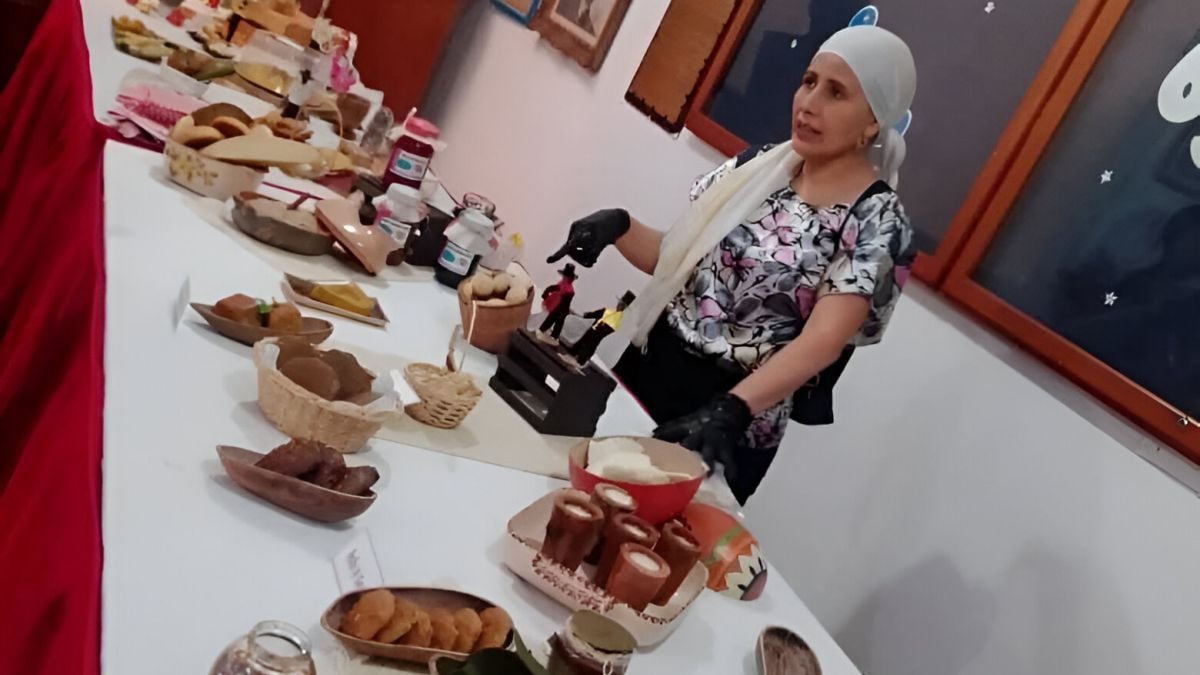
At the II Congress of Ancestral Venezuelan Cuisine, held in Caracas, Laura Díaz seeks that all participants clearly understand what ancient cuisine means, specifically that of the pre-Hispanic period. It emphasizes the importance of recognizing and making visible the technology developed by native peoples, which has shaped the food system of our habitat.
Laura Díaz's culinary legacy dates back to her ancestors, as both her paternal great-grandmother and grandmother were cooks. This heritage led her to found the Venezuelan Network of Ancestral Kitchens and to dedicate herself to recovering the flavors of Venezuela's ancient memory.
Mazo News Team