Venezuelan Criminal Justice System evaluated actions against human trafficking
@MijpVzla
Published at: 17/02/2024 09:36 AM
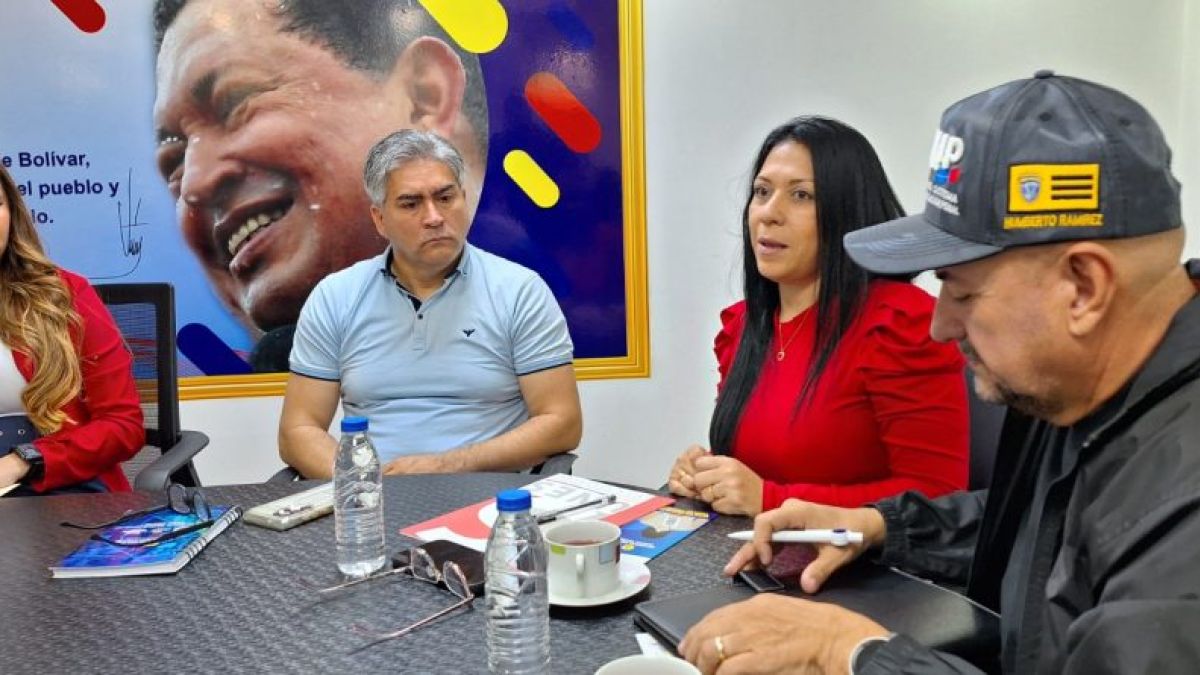
A set of strategies aimed at the comprehensive prevention and visibility of human trafficking were the topics reviewed at the high-level panel held this Friday, February 16, by members of the Venezuelan Criminal Justice System.
The conference, held at the facilities of the Ministry of People's Power for Internal Relations, Justice and Peace, was led by the Deputy Minister of the Integrated Criminal Investigation System, Humberto Ramírez, and the Deputy Minister of Internal Policy and Legal Security, Alana Zuloaga. The importance of coordinating the work carried out by the bodies of the different Public Powers was discussed, to counteract the recruitment methods used by structured organized crime groups dedicated to trafficking in persons.
In a press release published on the website of the Ministry of People's Power for Internal Relations, Justice and Peace, he points out that Ramírez emphasized the role played by each organ of the Justice System in carrying out criminal investigations against this criminal activity, as well as on the preventive strategies to be carried out to prevent Venezuelans from becoming victims of this crime through digital platforms.
For his part, Zuloaga stressed that the Venezuelan State has invested all its efforts in ensuring comprehensive care for victims of this crime, who know no differences in race, gender, sex, nationality or age.
In addition, the president of the Criminal Judicial Circuit of the Metropolitan Area of Caracas, Katherine Haringhton, highlighted the importance of coordination between the different organs of the State to deal with this crime, at the same time she brought members of the capital's criminal justice system to order to contribute to prevention days.
Trafficking in persons is an anti-legal act defined in the Organic Law against Organized Crime and the Financing of Terrorism, which in its article 41 establishes that anyone who, as part of an organized crime group, executes, promotes or facilitates the recruitment or transportation of people through different means of coercion for the exercise of begging, forced labor or services, servitude, sexual slavery, organ extraction, pornography, among others; will be punished or punished with imprisonment for 20 to 30 years, as the case may be.
The activity was attended by members of the Public Ministry (MP), the Public Defense (DP), the Office of the Ombudsman (DdP), the Criminal and Criminal Scientific Investigations Corps (CICPC) and the Bolivarian National Police Corps (CPNB).
Mazo News Team