Agrifood, Fishing and Aquaculture Engine guarantees the country's growth and food security
Instagram Juan Carlos Loyo
Published at: 27/01/2025 08:17 PM
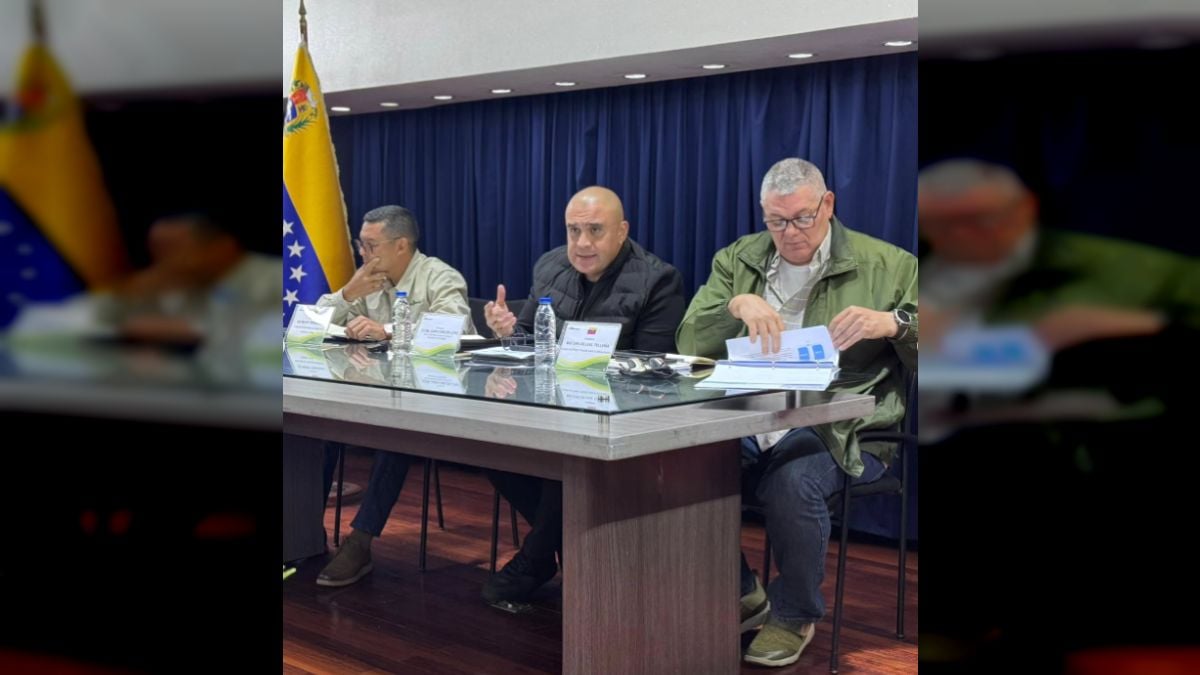
Representatives of the Venezuelan Agrifood, Fisheries and Aquaculture Engine held a working table to develop plans to guarantee and consolidate growth and national food security.
The meeting was led by the Minister of Fisheries and Aquaculture, Juan Carlos Loyo; the Minister of Agriculture and Productive Lands, Menry Fernández and the Minister of Food, Carlos Leal Tellería.
Various actors from the sector were also present, who analyzed the progress achieved and the remaining challenges, reported Venezolana de Televisión.
The meeting was guided by the proposals issued on January 21 by the President of the Republic, Nicolás Maduro, which include the importance of the agri-food sector as an engine of the Venezuelan economy.
In his speech, Loyo emphasized that to consolidate the success of these initiatives, a Technical Secretariat will be formed with two components: one designed to coordinate inter-institutional communication between the entities involved, and the second to structure political theories, strategies and monitoring and evaluation mechanisms.
For his part, Minister Fernández highlighted the poultry sector as a pillar of the agri-food engine, which currently demonstrates sustained growth.
“This sector is estimated to grow 8% more by 2025, contributing to the country's food security and the generation of foreign exchange through exports,” he said.
He noted that “this year will be key for the growth of the agri-food sector, this has to be the year of internationalization of the agricultural sector and of positioning Venezuela as an important exporter of corn in the region.”
For his part, the member of the Venezuelan National Poultry Federation (FENAVI), Francisco Tagliapietra, proposed to inaugurate a maritime route between Venezuela and Aruba, in addition to the creation of stricter health protocols for the prevention and surveillance of avian influenza.
These meetings highlighted the articulation between the public and private sectors, the strengthening of the national production of basic foods such as cereals, legumes and vegetables, with the application of public policies to guarantee the country's food security, and as well as contributing to the diversification of exports; the technological modernization of the sector was also present in the round of talks.
They also highlighted the importance of family and peasant agriculture, a fundamental part of motor development in rural areas of the country and a complement to the sustainability of the nation's agri-food production.
Mazo News Team