MINCYT promoted the reproduction of more than one million fry in 2024
MINCYT
Published at: 27/12/2024 03:47 PM
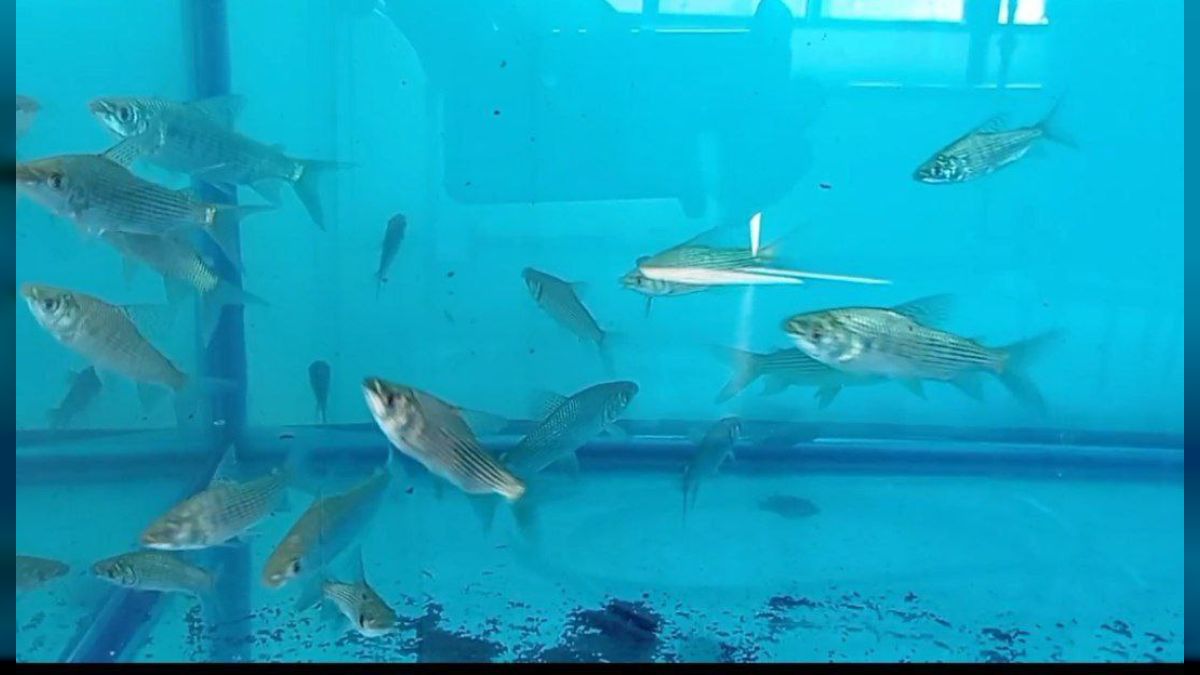
The Venezuelan Academy of Agricultural Sciences (ACAV), an entity attached to the Ministry of Popular Power for Science and Technology (MINCYT), reached an important milestone in institutional management corresponding to the induced reproduction of the Coporo (Prochilodus mariae).
This was reported by the sector vice-president of Science, Technology and Health, Gabriela Jiménez Ramírez on her Telegram channel.
“During the year, the ACAV achieved the production of 1,071,000 fry. This effort was carried out by engineer Yenni Gómez together with a technical team of renowned experience and responsibility, in a clear commitment to the sustainability and sustainability of the Venezuelan fishery, providing significant elements for strengthening national food security.”
He noted that “the methodological process included the rigorous selection of females and males, their weighing and the application of synthetic gonadotropin-releasing hormone, with doses adjusted to the weight of each specimen. Subsequently, the Copores were placed in tanks with a swivel system that favored mating under strict temperature conditions, essential for the proper development of eggs.”
He explained that in a controlled environment, the spawned eggs hatched after 24 hours, giving way to the planting of the larvae in tanks prepared with phytoplankton, the first food to guarantee optimal initial growth. This comprehensive approach reflects the high technical and scientific level of the ACAV Aquaculture Laboratory.
He argued that the reproduction of Coporo is part of objective 1.4 of the 2019-2025 Homeland Plan.
“The induced reproduction of Coporo, a rheophilic and native species of great relevance to national fisheries, is a significant contribution to the conservation of aquaculture resources and to the development of sustainable aquaculture in Venezuela, in the same way it is framed in the Plan de la Patria 2019-2025, specifically to objective 1.4, which seeks to achieve agro-food sovereignty by increasing the consumption of animal proteins, ensuring the right to food of the Venezuelan people”, said the sector vice-president.
He also added that “the ACAV embraces investigative action based on the precepts of Commander Hugo Chávez, assuming the need to 'build our own, creative, diverse scientific-technological style; one that comes from our own bowels, from our history, our culture, our traditions and, above all, that is promoted according to our needs'”.
“In this way, the Government of President Nicolás Maduro Moros, the Ministry of Popular Power for Science and Technology and the Great Mission of Science, Technology and Innovation Dr. Humberto Fernández Morán reaffirm their commitment to scientific and technological advancement as a pillar of the country's agri-food development,” he said.
MINCYT