Ruta de la Esperanza serves 91% of temporary camps in Venezuela
Press
Published at: 02/09/2026 05:36 PM
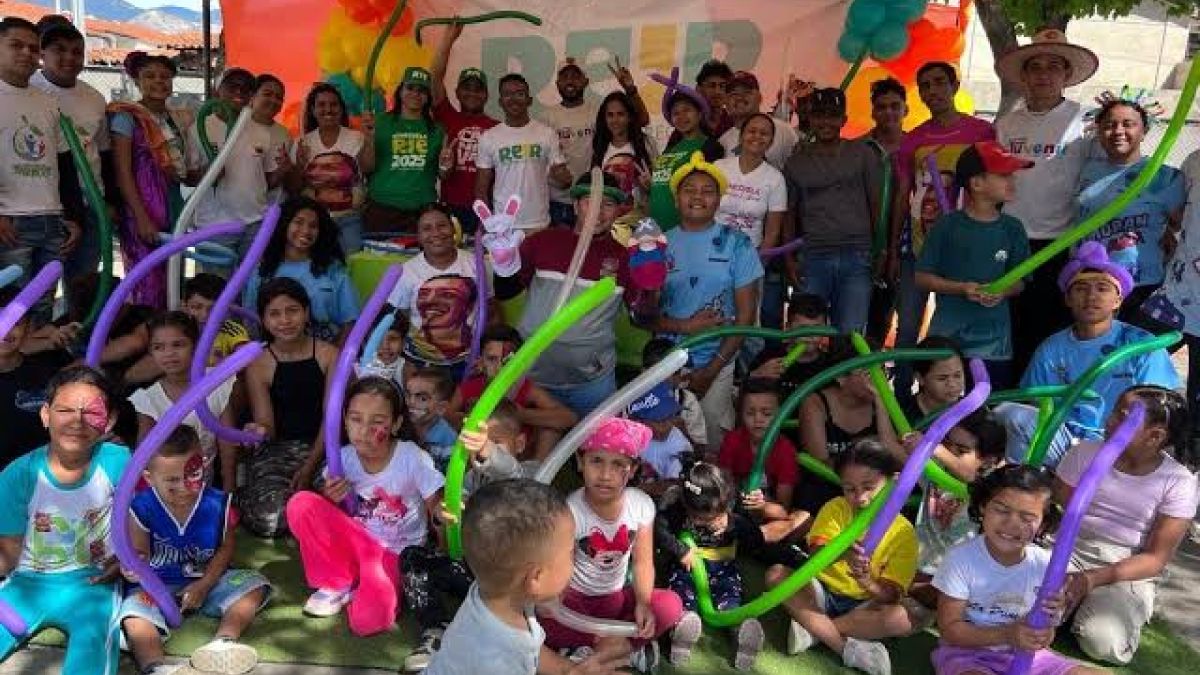
After a little more than two months of the double earthquake that affected the central area of the country on June 24, the social and cultural program “The Route of Hope” is consolidated as the main policy for emergency psychosocial care. This initiative, active since Friday, June 26, 2026 in the Plaza de la Moneda in Caracas, came about as an urgent mandate from the Ministry of Popular Power for Culture, the Mayor's Office of Caracas and the Government of the Capital District. Its original purpose is to mitigate the emotional impact, fear and anxiety on children and their families through art, music and recreation.
To date, the civil and community plan has accumulated more than 2,200 hours of artistic activities, with which it achieved the successful intervention of 98 of the 107 temporary camps and protection centers enabled by the seismic contingency. The institutional evolution of the route experienced a notable boost at the end of July, when its brigades were formally integrated with the Laugh 2026 Community Vacation Plan. This strategic alliance allowed the expansion of the range of action from closed shelters to open spaces and vulnerable communities throughout the month of August, with a diverse range of workshops on drawing, circus arts, oral storytelling, traveling cinema and group sports dynamics.
The deployment of this program is exclusively concentrated on the national territory and prioritizes the four federal entities that received the greatest impact of the contingency: Capital District, Miranda, La Guaira and Aragua. In Caracas, the route took over emblematic spaces such as the Guayana Esequiba Cultural and Sports Complex in San Bernardino and the Science Museum, as well as shelter centers in populous parishes such as El Valle, La Pastora, El Paraíso and January 23. For its part, the state of Miranda received care in sectors of Chacao and Baruta, while in La Guaira the epicenter of assistance is located in the temporary maritime camp and various shelters on its coastal strip.
For this week of September, the authorities designed a schedule that marks the final stretch of the Community Vacation Plan, which takes recreational approaches to new geographical frontiers in the center and west of the country. The multidisciplinary teams carry out a priority deployment in the Caracas parishes of Macarao (with attention to the Juan Lovera camp), San Agustín and El Valle, as well as in the communities of Maiquetía in La Guaira. In addition, the cultural program extends to community centers in the state of Yaracuy, specifically in the municipality of Veroes, together with activities in local shelters in the state of Apure and the Andean Region through state offices of culture.
With the objective of ensuring the continuity and strengthening of these community resilience days, the call to incorporate new creators, cultivators, artists and recreational people as volunteers is still open. Interested parties have two official forms of registration: the first digitally, by accessing the unified web portal reir.org.ve to register their data and specialty; the second, in person at the facilities of the Caracas Polyhedron with the presentation of the original identity card. After the census and validation of their skills, the brigade members receive an official accreditation with a QR code that authorizes their safe entry to the safe areas to bring joy to Venezuelan families.
Mazo News Team