Venezuela evaluates the impact of earthquakes with a millimeter precision system
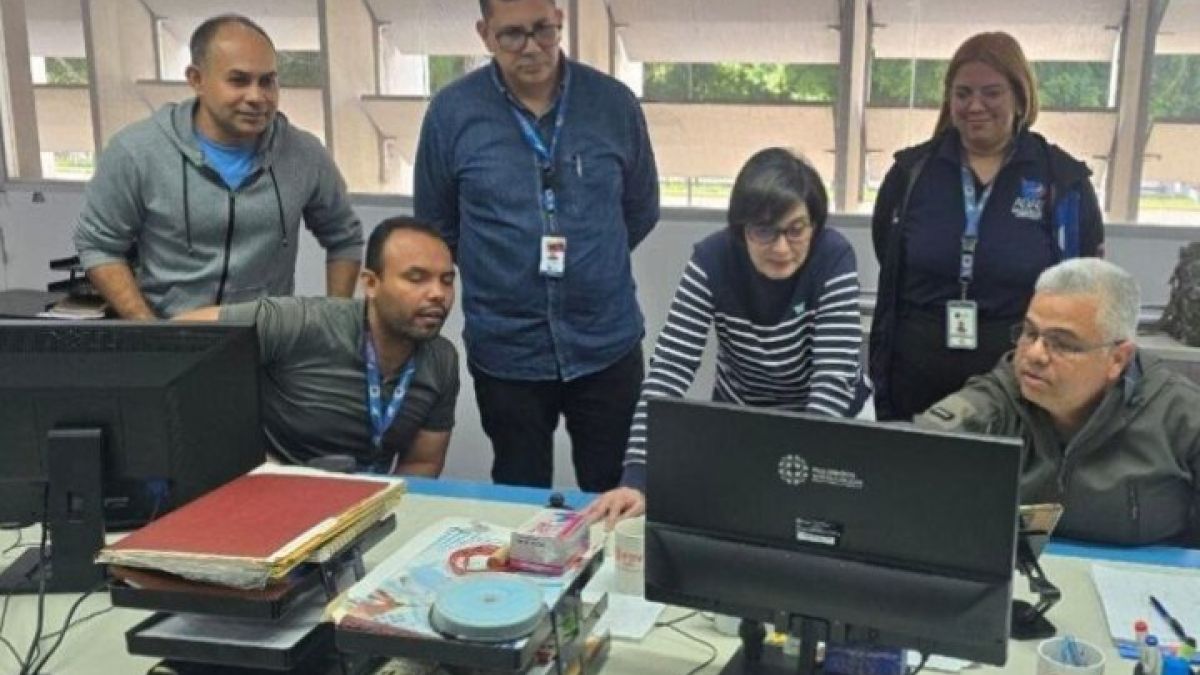
Photo: MINCYT
Published at: 26/06/2026 11:26 AM
Scientists from the Bolivarian Agency for Space Activities (ABAE) are deployed analyzing satellite radar images using InSAR (Synthetic Aperture Radar Interferometry) technology. This advanced technical tool allows us to measure with millimeter precision the movements, displacements and deformations suffered by the Earth's crust after the intense seismic activity recorded in the country.
This was reported by the Minister of Science and Technology, Gabriela Jiménez, who explained that the use of this system is essential for managing current crises.
“This tool allows us to understand seismic processes and assess the risk of earthquakes by comparing images captured at different times,” said the head of the scientific portfolio, highlighting the role of Venezuelan space engineering in risk mitigation.
The technological monitoring process, as reported by Venezolana de Televisión (VTV), generates a specialized deformation map known as an interferogram, which visually reflects real geographical alterations through specific color patterns. According to the technical explanation of the ABAE experts, each complete color cycle revealed on the map represents a physical displacement on the surface of approximately 2.8 centimeters.
Minister Jiménez specified that the evaluations yielded crucial data on the behavior of the plates in the north-coastal region: “In the case of the San Sebastian Fault, the concentration and abrupt change of the color stripes evidence the tectonic movement that occurred, information that is directly related to the seismic activity recorded in the last 24 hours and that helps to estimate the intensity of the earthquake and its impact on the territory.”
“The ABAE works in coordination with more than 13 international space agencies to study these phenomena before, during and after an earthquake, strengthening the monitoring and understanding of Earth's dynamics for the benefit of risk management and the protection of the population,” he concluded.
Mazo News Team